Using Interfaces to Build Modular & Scalable Systems
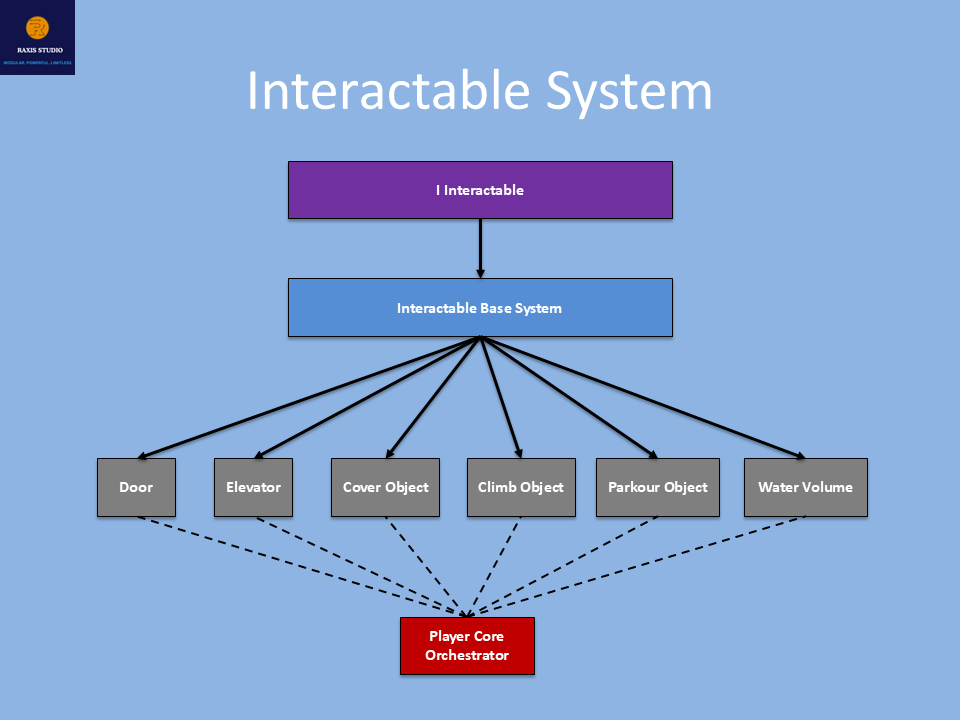
Intro: Why Interfaces Matter for Game Development When you’re building a game, it’s tempting to hardcode features quickly. But soon, everything becomes tightly coupled: input tied to movement, health tied to player, and systems break when you try to add or remove features. The Modular Third-Person Framework avoids this trap by being interface-driven. Every major system: movement, stamina, breath, health, interactables, input, IK, and UI is built on clean contracts. This makes the framework modular, extensible, and future-proof.
The Challenge: Tightly Coupled Systems Developers often face these issues when building without interfaces:
- Code duplication → similar logic repeated across multiple classes.
- Rigid dependencies → removing or swapping systems breaks everything.
- Unscalable design → adding new mechanics requires editing core files.
- Testing difficulties → can’t isolate or mock systems easily.
The Solution – Interface-Driven Architecture The framework uses interfaces everywhere to enforce contracts and promote clean, modular design. Examples of Interfaces in Action
- IPlayerState → governs all movement states (OnStateEnter, OnStateUpdate, OnStateExit) across Idle, Walk, Jog, Sprint, Climb, Cover, Parkour, Swim, Dive, etc.
- IHealthState / IStaminaState / IBreathState → abstract vitality systems with methods and events (TakeDamage, UseStamina, UseBreath, recovery hooks) reusable beyond the player controller.
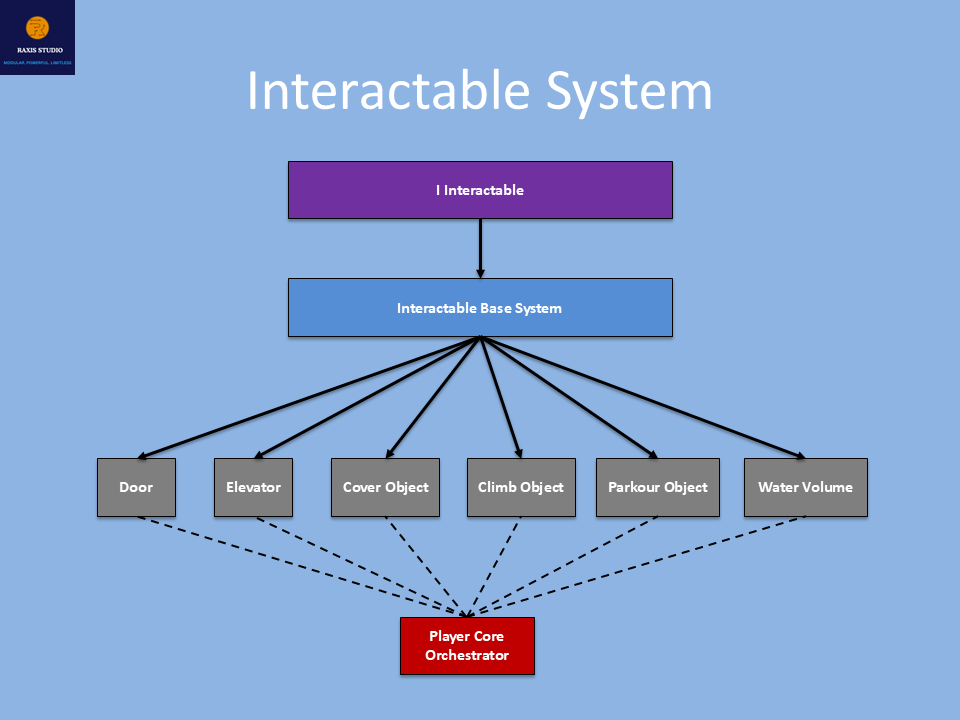
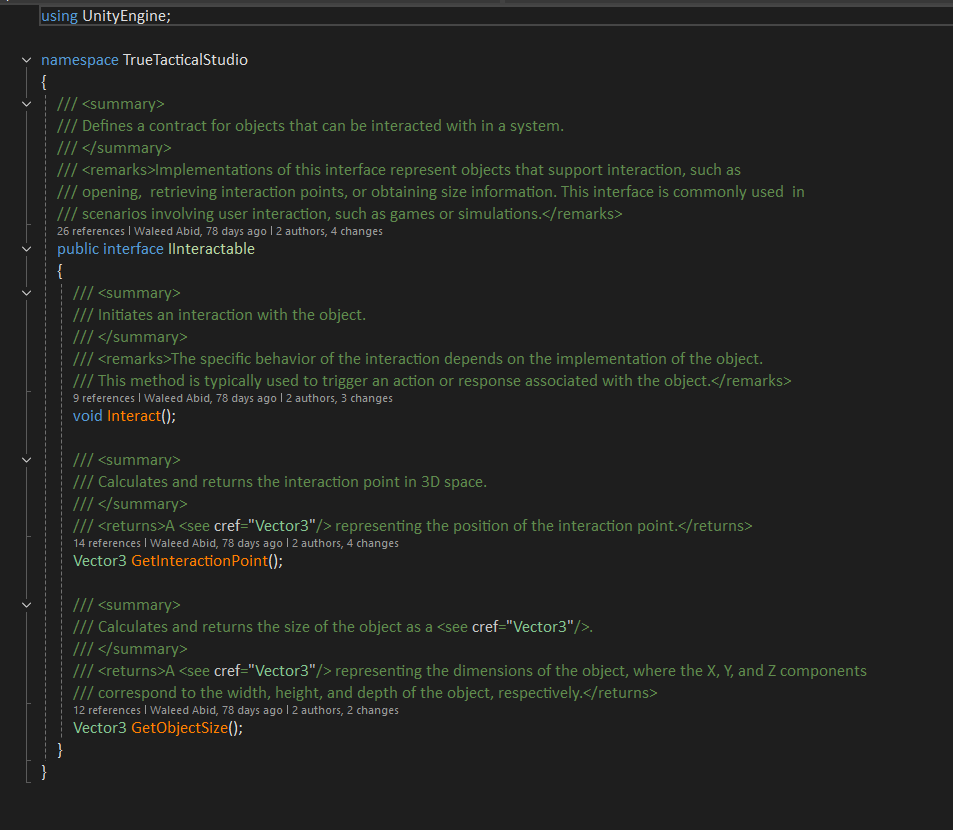
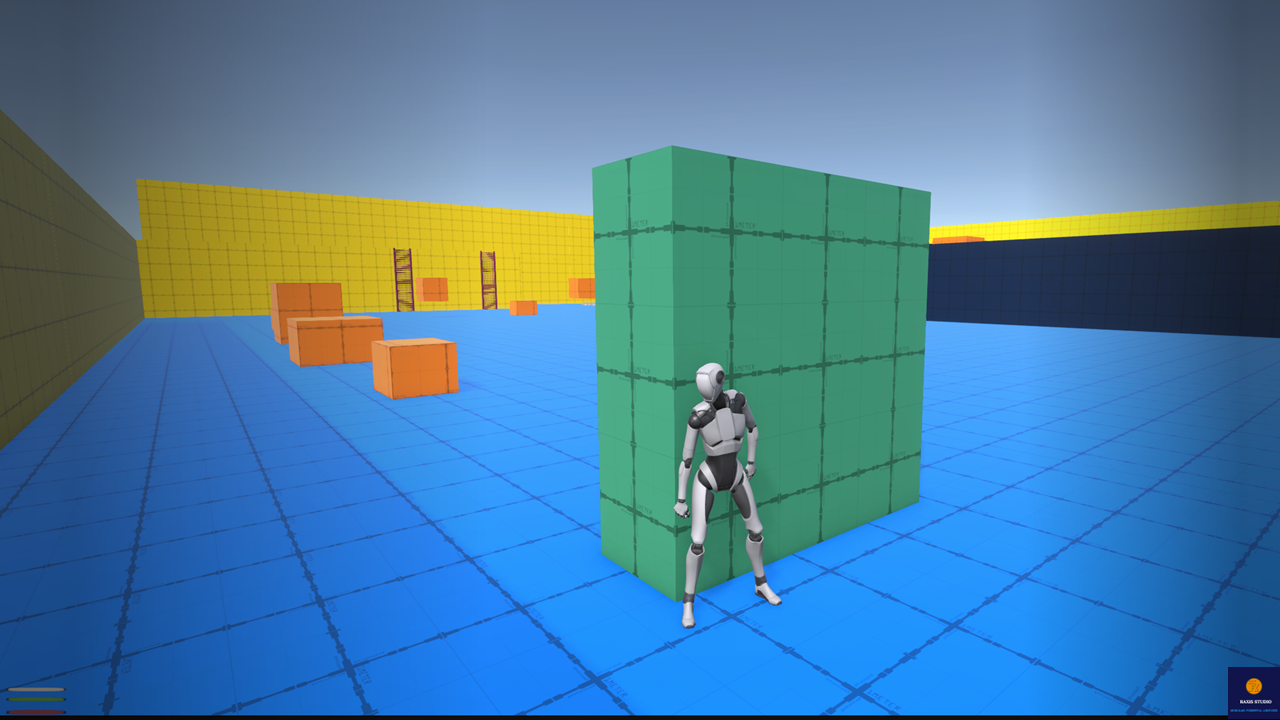
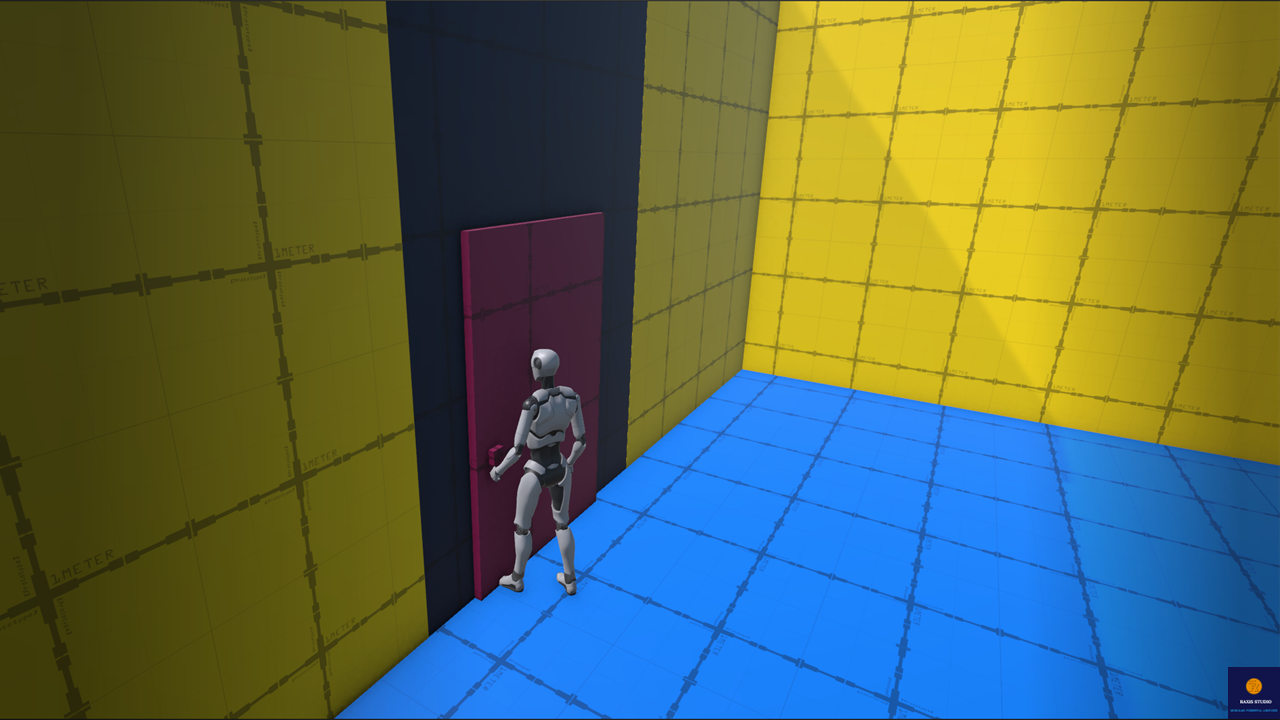
- IInteractable → defines interactions for scene objects (doors, elevators, climb points, cover, parkour, water, ledges) via Interact(), GetInteractionPoint(), and GetObjectSize().
- IInputCommand → encapsulates input actions using the Command Pattern, making gameplay and menu input rebindable without editing code.
- IIKSystem → ensures feet and hands align naturally with terrain and interactables, and provides reset/activation methods.
- IPlayerUI → defines contracts for health, stamina, breath, and menus so UI listens via events, not hardcoded logic.
Benefits
- Plug-and-Play Systems → swap or extend mechanics without breaking others.
- Reusable Beyond the Player → same interfaces can drive NPCs, AI, or even non-humanoid rigs.
- Scalability → add new states (e.g., ledge hang, zipline) without touching core player files.
- Testability → mock interfaces to test systems in isolation.
- Event-Ready → interfaces expose event hooks (OnHealthChanged, OnBreathChanged, OnStaminaDrained) so UI and other systems can subscribe without modifying gameplay logic.
Proof: Interfaces in Action Without interfaces:
- Removing stamina → forces rewriting parts of the player controller.
- Adding swimming → touches multiple core files, introducing bugs.
- Adding IK → requires editing animator and player scripts directly.
With the framework’s interface-driven design:
- Remove stamina → just unplug the IStaminaState implementation; the controller still runs.
- Add swimming → create a SwimState that implements IPlayerState; no core changes needed.
- Add IK → implement IIKSystem and plug it into the state machine; feet and hands align automatically.
Developer-Friendly by Design
- Interface-first → every system starts with a contract (I*).
- Composition over inheritance → features are assembled, not hardwired.
- Factory Pattern → states instantiated via interfaces, never tightly bound.
- Dependency Injection → systems receive dependencies through constructors, keeping them decoupled.
- Event-driven communication → interfaces + delegates ensure clean system interaction.
Use Cases
- Indie developers → scale prototypes into production-ready games without rewriting the controller.
- Teams → divide responsibilities cleanly (AI on IInteractable, movement on IPlayerState, UI on IPlayerUI).
- Advanced users → extend the framework with new mechanics using the same interface-driven pattern.
Closing: Clean Code That Scales With You Building games isn’t just about mechanics it’s about building systems that scale as your game grows. The Modular Third-Person Framework gives you that advantage by being fully interface-driven. What starts as a prototype can grow into a full game without rework, because interfaces ensure everything is modular, swappable, and future-proof.
👉 Get the Modular Third-Person Framework on the Unity Asset Store: Modular Third-Person Framework | Game Toolkits | Unity Asset Store