Future-Proofing Your Game: Why Modular Design Matters for Indie Devs
Intro: Building for Today and Tomorrow Indie developers often build fast, but that speed can come at a cost: tightly coupled systems, spaghetti code, and projects that collapse under their own weight as they grow. The Modular Third-Person Framework takes a different path. By focusing on modularity, interfaces, ScriptableObjects, and events/delegates, it ensures that your game isn’t just working today, it’s ready to scale tomorrow.
The Challenge: Shortcuts That Don’t Scale Most beginner or even mid-level projects run into the same problems:
- Systems hardcoded into the player prefab.
- Adding a new mechanic breaks existing ones.
- Animations locked to specific states.
- UI tightly coupled to logic, impossible to replace.
- Rewriting large chunks of code when the game direction changes.
For indies, this often means abandoning projects instead of finishing them.
The Solution: Modular Architecture for the Long Run The framework is designed to be future-proof with clean, extensible design principles:
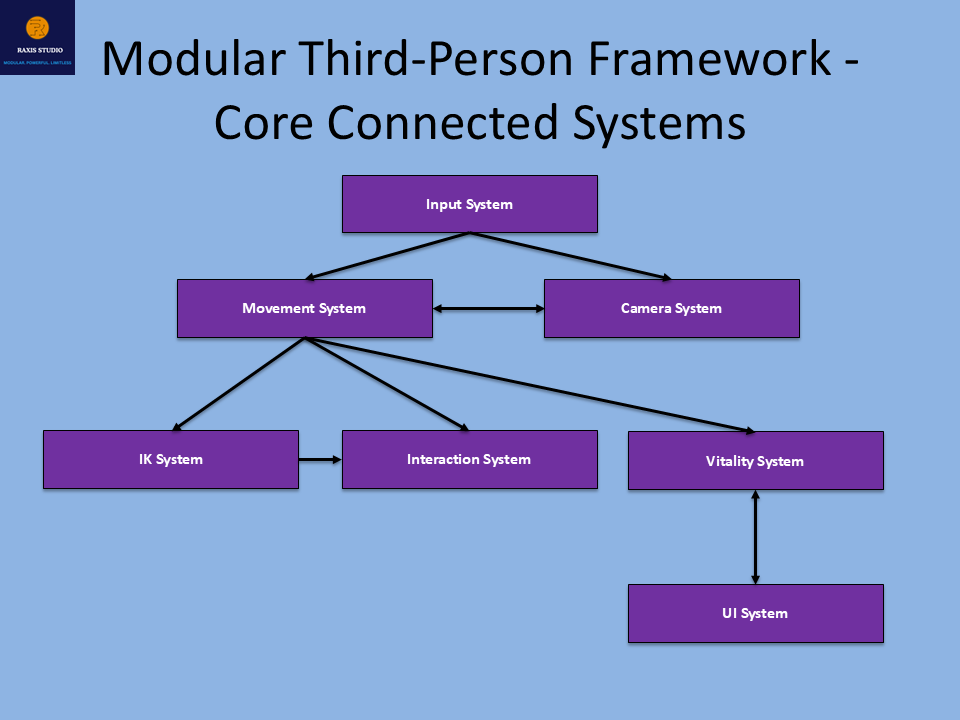
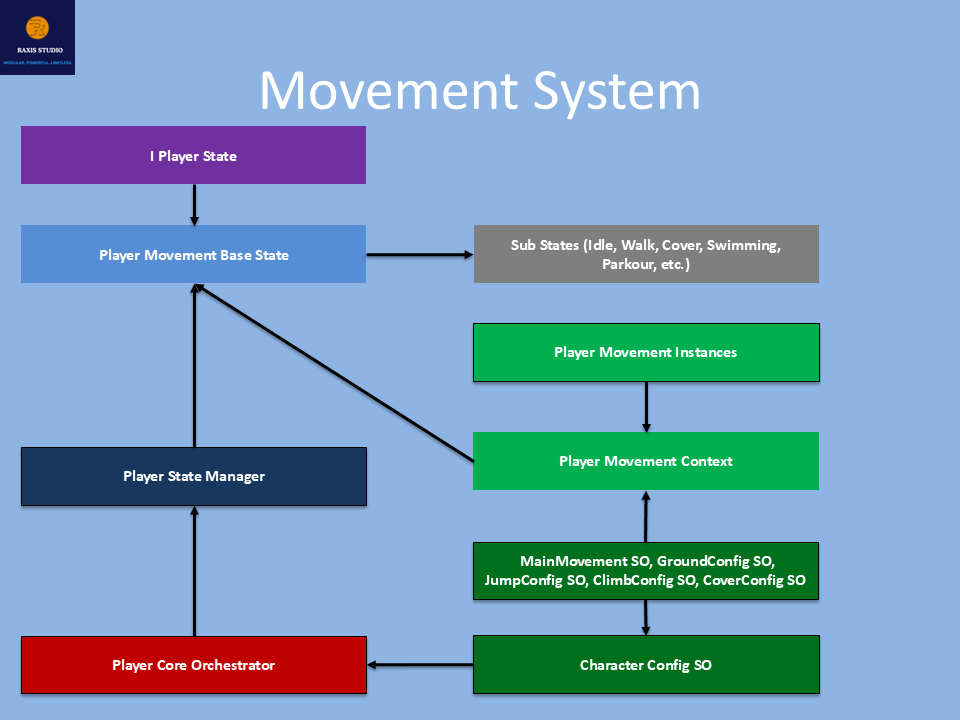
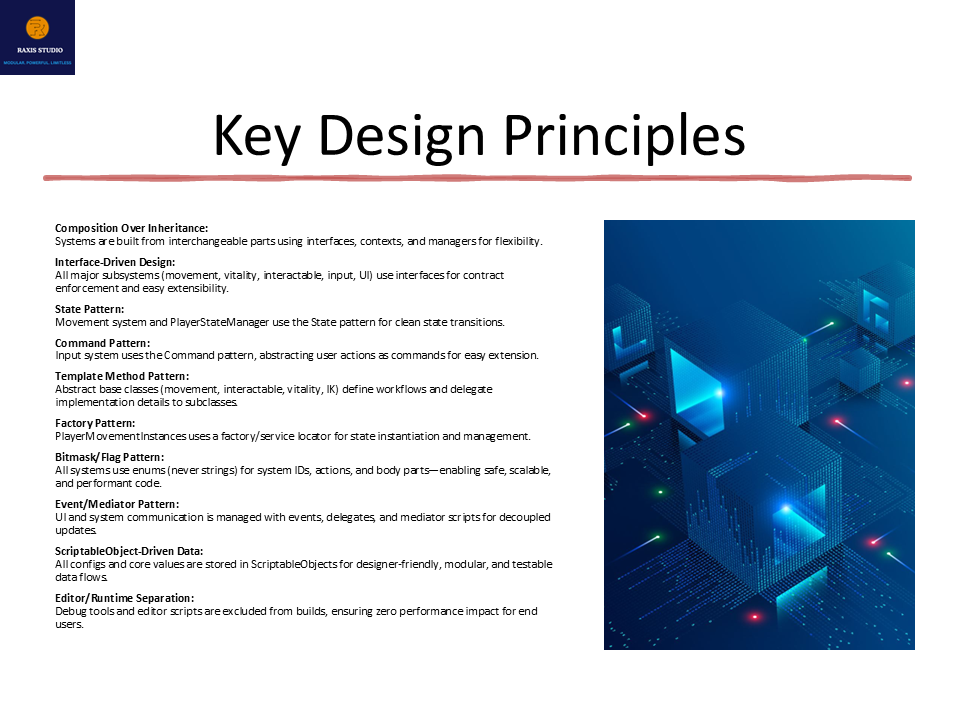
- Interfaces Everywhere → systems communicate through contracts (IPlayerState, IInteractable, IHealthState, IStaminaState, IBreathState, IInputCommand).
- State Machine + Factory → adding or removing states/mechanics without rewriting core logic.
- ScriptableObjects for Configs → designers can tweak values without code changes.
- Event-Driven Communication → decoupled systems that broadcast, not hardcode.
- Animator Placeholders → no animation lock-in; you choose your style.
- Reusable Beyond the Player → systems like Vitality, Interactions, and IK can be mirrored for NPCs, AI, or even non-humanoid entities.
Proof: A Framework That Scales With You Without modular design:
- You want to add climbing → rewrite half the movement script.
- You remove stamina → sprinting breaks.
- You add NPCs → duplicate health and cover logic.
With the framework:
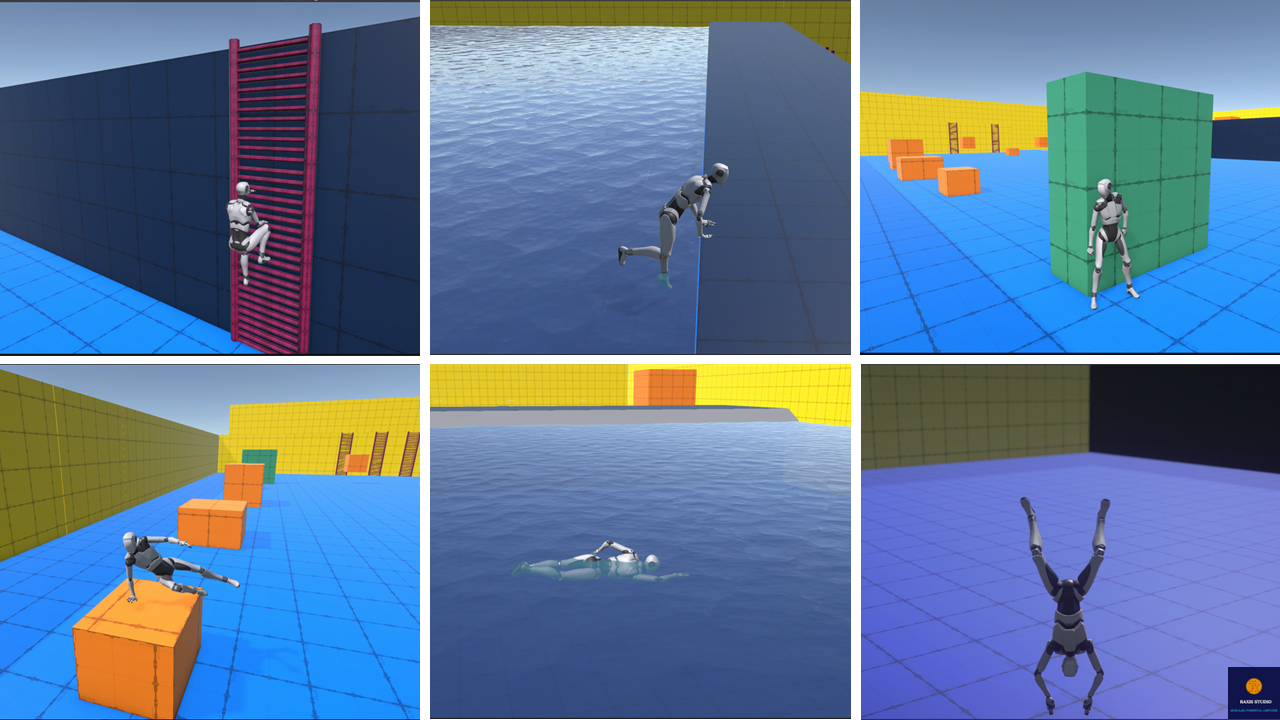
- Add climbing → drop in ClimbObject + animations, plug into existing state factory.
- Remove stamina → locomotion still works; no broken references.
- Add NPCs → reuse the same Vitality, Interaction, and IK systems for consistency.
Developer-Friendly by Design
- Composition over inheritance → assemble systems like building blocks.
- Loose coupling → swap, extend, or remove features without fear.
- Debug + Profiles → Debug Tool + ScriptableObjects make iteration safe.
- Scalable → same framework works for prototypes and production-level projects.
- Educational → built with best practices that teach you clean Unity architecture as you use it.
Use Cases
- Indie devs → start with a lean prototype, add features only as needed.
- Studios → scale projects safely across teams without spaghetti dependencies.
- Educational projects → teach modular architecture and clean coding patterns in Unity.
- Long-term support → frameworks that survive Unity version upgrades (Unity 6.0.1+ ready).
Closing: Future-Proof Your Development Your time is limited. Don’t waste it untangling spaghetti code or rebuilding features every time you scale up. With the Modular Third-Person Framework, you build on a foundation designed to last — modular, extensible, and future-proof.
👉 Get the Modular Third-Person Framework on the Unity Asset Store: Modular Third-Person Framework | Game Toolkits | Unity Asset Store