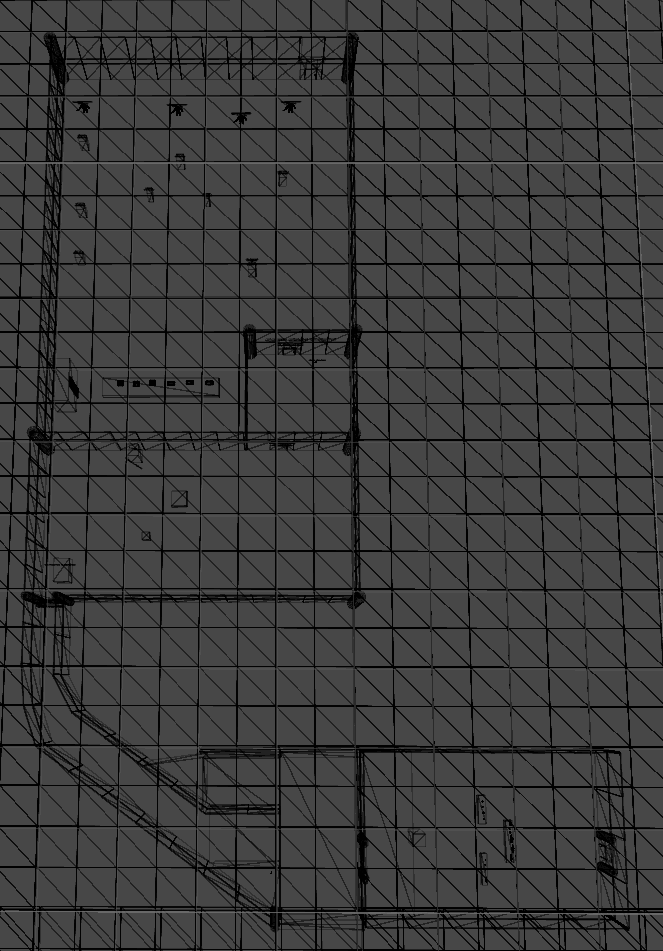
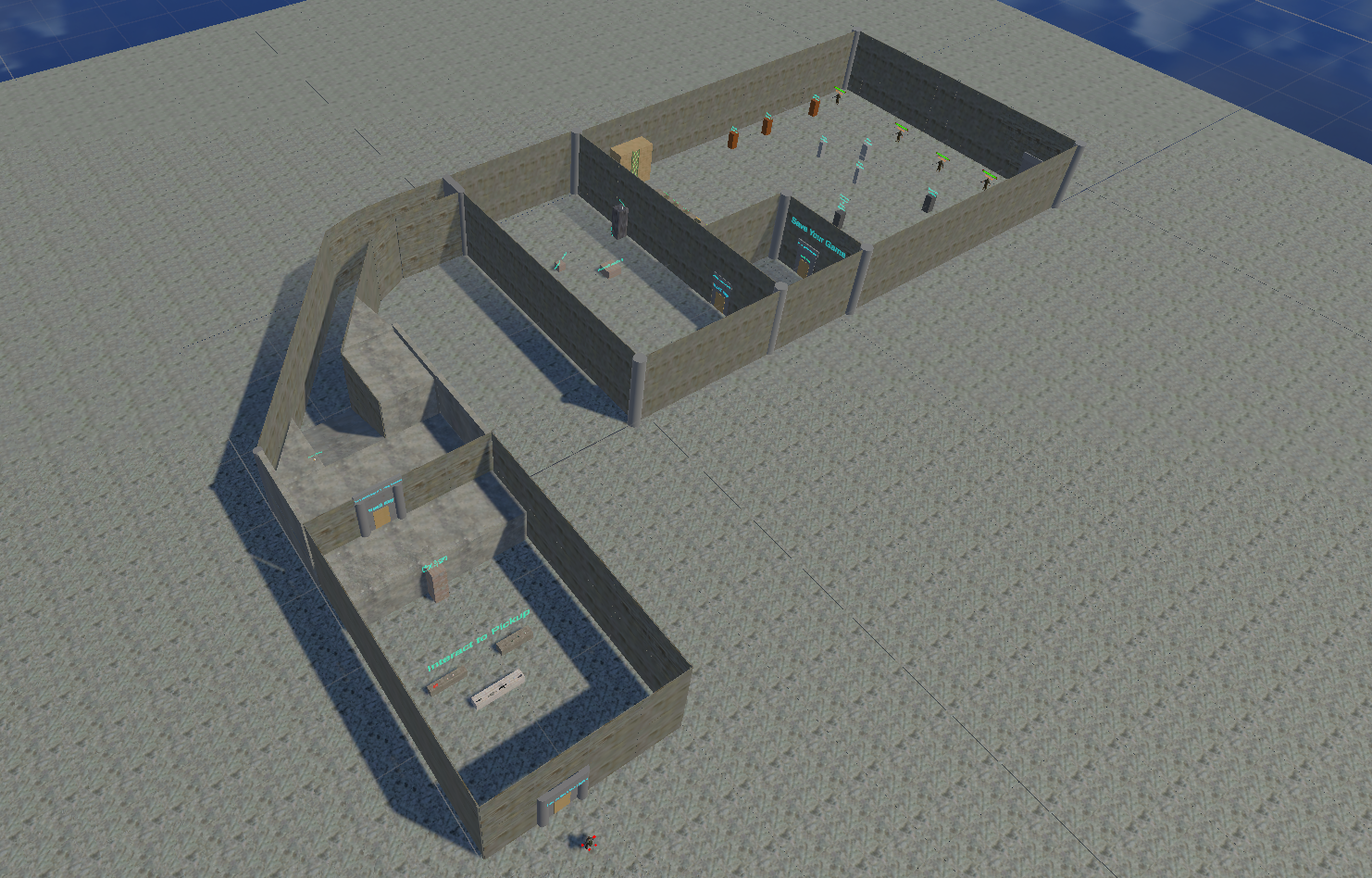
Building the Showcase Environment for MTPSF
A showcase environment is more than a place to record videos or present visual results. For a modular shooter framework, the showcase scene needs to help explain the product. It should make the systems easier to observe, easier to compare, and easier to understand without overwhelming the viewer with too much happening at once.
MTPSF is being prepared with a showcase environment that supports this purpose. The goal is not only to make the scene look presentable, but to use the scene as a practical demonstration space. Each area should communicate what is being shown, why it matters, and how the systems connect without turning the presentation into a crowded collection of unrelated objects.
In a shooter framework, many systems can be demonstrated: weapon movement, shooting behavior, inventory, pickups, interaction, health, surface impact, utility items, and other gameplay features. If all of these systems are placed together without structure, the scene may become confusing.
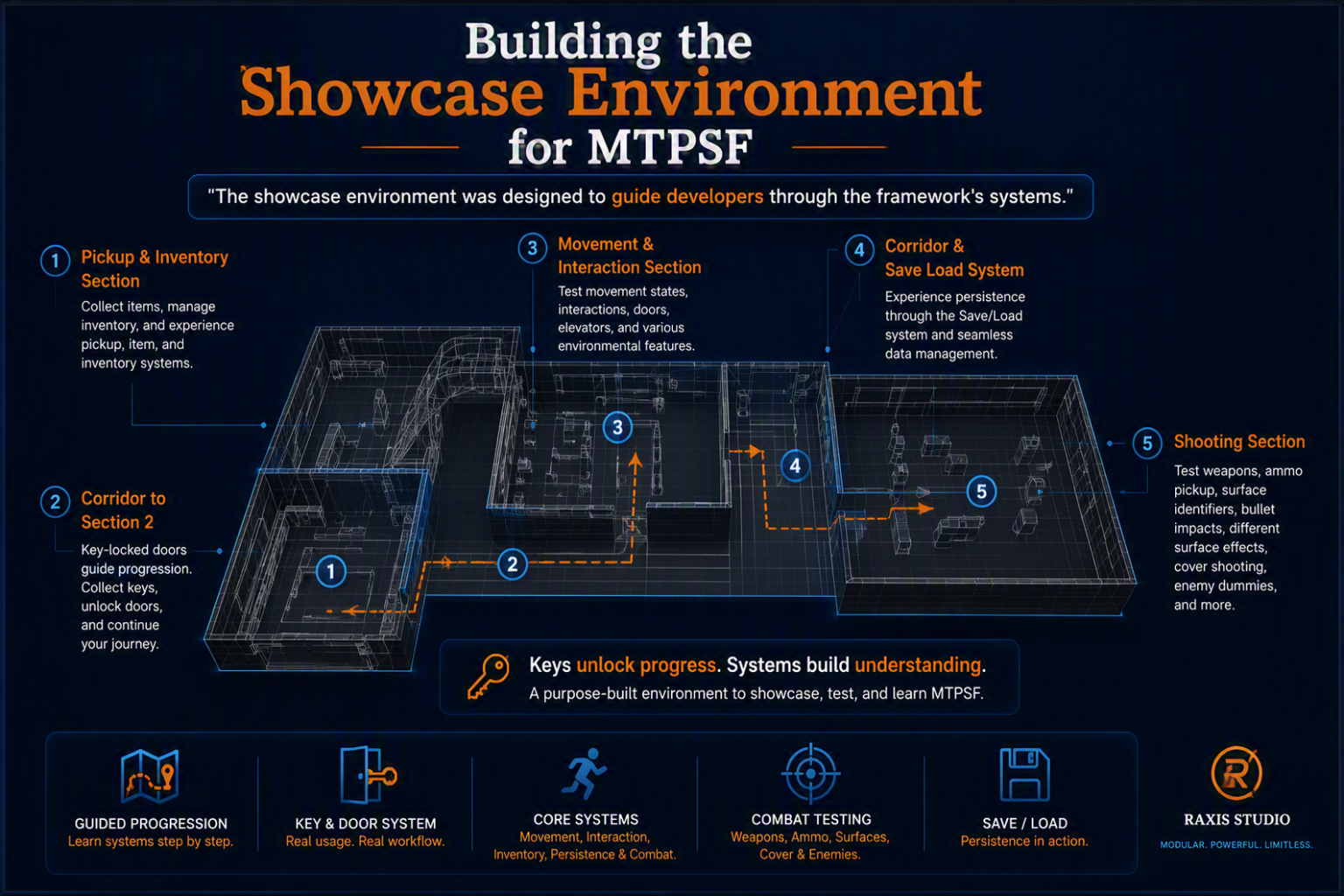
A developer watching the showcase should be able to understand which system is being demonstrated and what behavior is being highlighted. This is why scene organization matters. A showcase environment can be divided into focused sections or stations, where each area has a clear purpose. One section may demonstrate movement-related behavior. Another may focus on shooting behavior. Another may show interaction or item usage.
By separating the demonstrations, the scene becomes easier to read and the viewer can focus on one group of systems at a time. Isolation does not mean the systems are disconnected. In actual gameplay, systems often work together. However, a showcase needs to reveal behavior clearly. If a scene tries to demonstrate every connection at once, the result may feel noisy. A cleaner environment can show individual systems first, then allow the viewer to understand how those systems support the larger framework. Visual clarity is also important.
The environment should support the demonstration instead of competing with it. Materials, props, targets, interaction objects, and section boundaries should help guide attention. The showcase does not need to rely on complex art assets to be effective. A simple, organized layout can be more useful when the purpose is to explain systems and behavior.
The showcase environment also helps communicate development intent. When systems are placed in clear sections, it shows that the framework was not only built as a set of features, but also prepared to be explained. This matters for reusable Unity assets because developers often need to evaluate both the visible behavior and the structure behind it.
For MTPSF, the showcase scene is also connected to product readiness. A well-prepared showcase can reveal whether systems behave consistently, whether interactions are clear, whether configuration choices are visible, and whether each feature can be demonstrated without unnecessary confusion. The scene becomes a validation space as well as a presentation space. This kind of preparation supports better communication with developers.
Instead of only showing a fast montage of gameplay, a structured showcase can help developers understand what the framework includes and how each system behaves. It gives the product a clearer presentation because the viewer can follow the demonstration instead of trying to guess what is being shown.
A showcase environment should also respect timing. Not every system needs to be shown in the same way or with the same amount of detail. Some systems are best demonstrated through short, focused actions. Others may need a slower explanation or a clearer setup. The environment should make it possible to record or present these systems without forcing every demonstration into one crowded flow.
Building the showcase environment for MTPSF is therefore part of the same developer-focused mindset behind the framework. The scene is not only about showing that the systems work. It is about showing them in a way that is understandable, organized, and useful for evaluation.
A clear showcase helps turn complex systems into a presentation that developers can follow. For a modular shooter framework, presentation and structure should work together. The framework needs systems that are organized internally, and the showcase needs to communicate that organization externally.
MTPSF’s showcase environment is being prepared with that balance in mind: clear enough to demonstrate individual systems, structured enough to support product presentation, and focused enough to help developers understand what they are seeing.