Why State Machines Matter for Player and Weapon Behavior
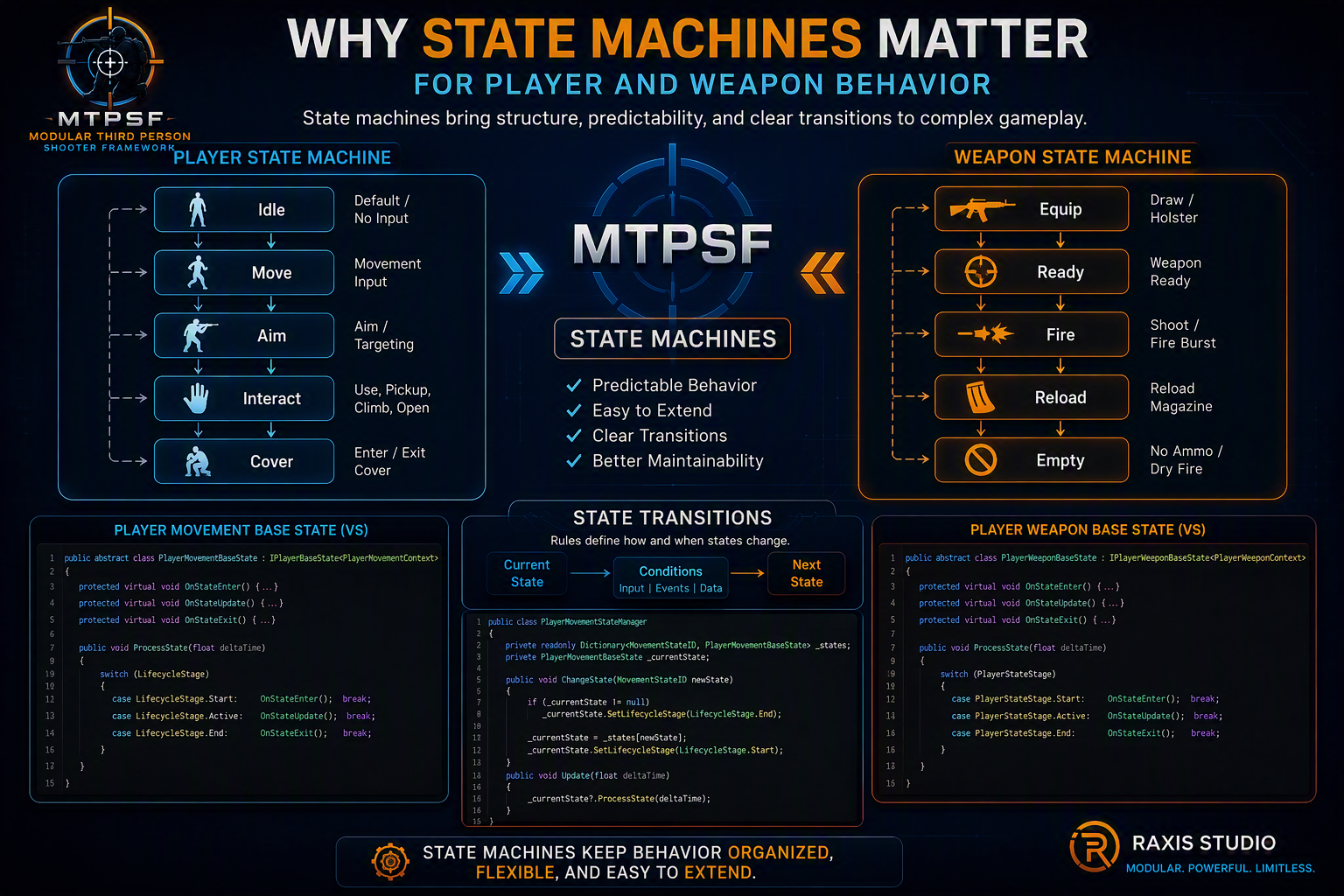
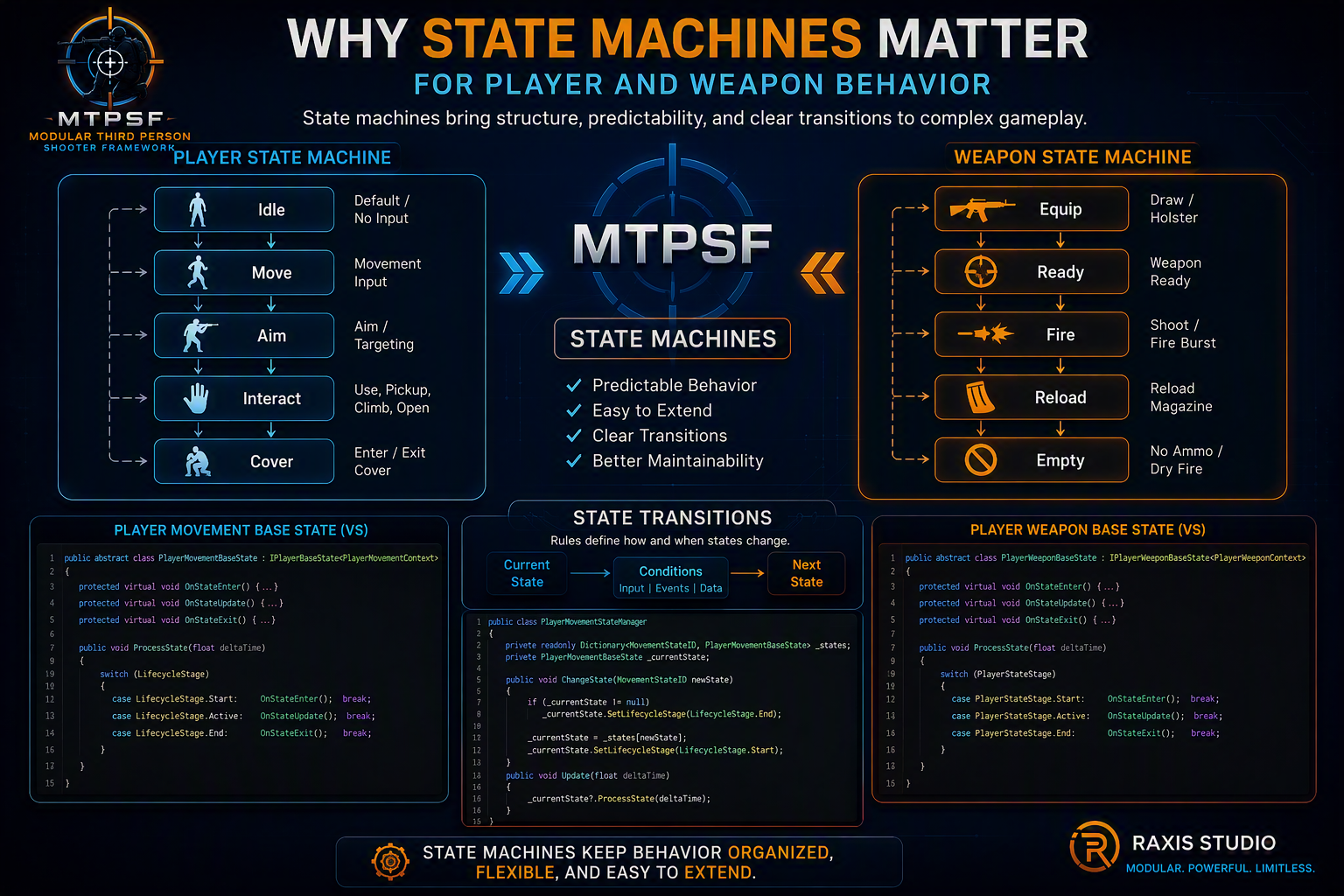
State machines matter in a shooter framework because player and weapon behavior often depends on context. A player is not always performing one simple action. The character may be idle, moving, aiming, firing, reloading, interacting, entering cover, leaving cover, or transitioning between several conditions. A weapon may also have its own behavior states, such as equipped, ready, firing, reloading, empty, switching, or unavailable. When these behaviors are handled without a clear state structure, the logic can become difficult to follow. Conditions may spread across different scripts, flags may overlap, and multiple systems may try to decide what the player or weapon is allowed to do at the same time. This can create hidden conflicts where one part of the framework believes an action is allowed while another part prevents it.
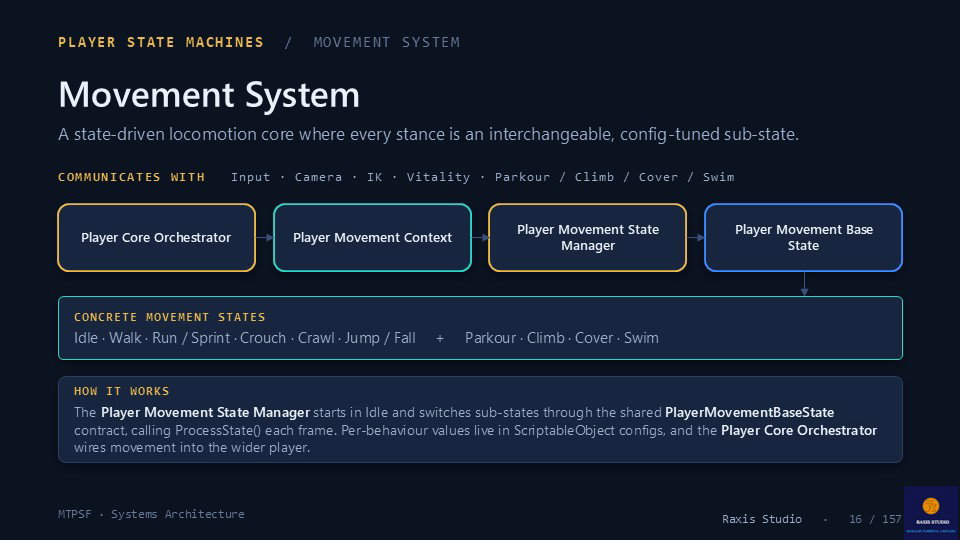
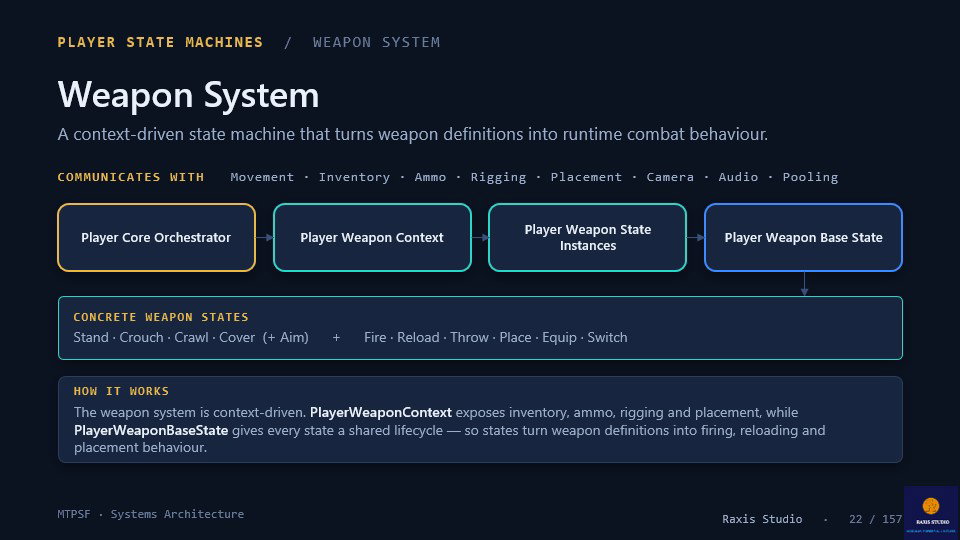
A state machine helps by organizing behavior into defined states. Each state represents a specific condition, and the framework can control how behavior changes from one state to another. Instead of checking many unrelated flags everywhere, the system can ask a clearer question: what state is currently active, and what transitions are allowed from that state? This is especially useful for player behavior. Movement may behave differently when the player is aiming, reloading, interacting, or using cover. Some actions may need to be blocked during a transition. Other actions may need to remain available. Without a clear state model, these rules can become scattered across the movement system, weapon system, camera system, input system, and interaction logic. Weapon behavior benefits from state machines for the same reason. A weapon should not fire while it is reloading unless that behavior is intentionally supported. It should not reload if it is already full, unavailable, or in the middle of another action. It may need different rules when equipped, holstered, switching, empty, or waiting for input.
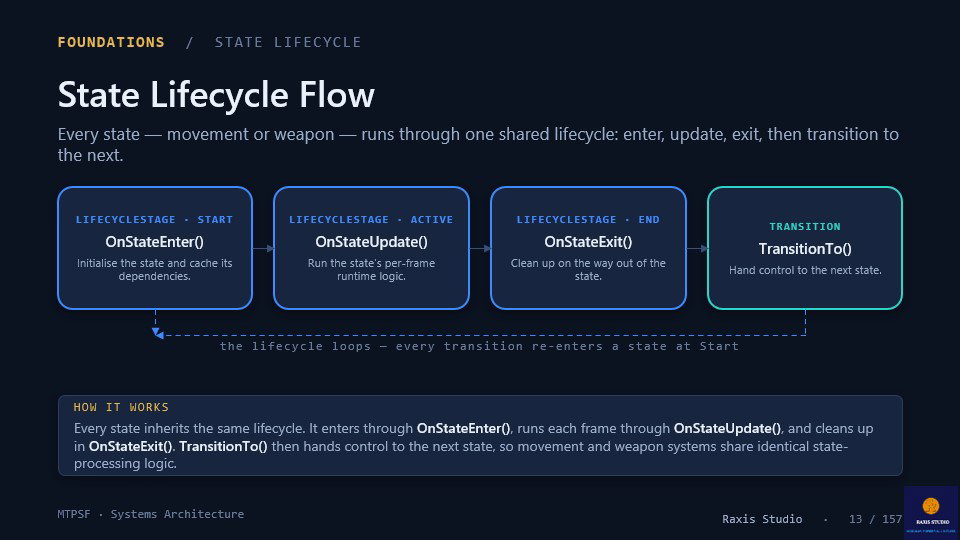
A state machine gives these rules a clearer place to live. State machines also make transitions easier to reason about. In shooter gameplay, many issues appear not because a single state is wrong, but because the transition between states is unclear. For example, moving from aiming to reloading, from reloading to firing, from firing to empty, or from interaction back to movement should follow predictable rules. When transitions are explicit, debugging becomes easier because the developer can inspect where the behavior changed and why.
Another benefit is readability. A clear state machine can describe gameplay flow in a way that is easier to understand than a long list of condition checks. Developers can see the available states, the responsibilities of each state, and the rules for moving between them.
This makes the framework easier to study, especially when it is imported into a project by someone who did not build the original codebase. State machines also support modularity. Player behavior, weapon behavior, camera behavior, and UI feedback may all need to respond to state changes, but they do not all need to own the rules for those states. A state machine can help define the current context, while other systems respond to that context through clear communication boundaries.
In MTPSF, state machines are part of the broader architecture direction because shooter behavior needs both flexibility and control. A modular framework should allow systems to grow, but it should also prevent behavior from becoming unpredictable as more features are added. Clear states help keep complex gameplay actions organized without forcing every system to solve the same logic independently. This becomes more important as a framework prepares for use beyond its original development scene.
Reusable Unity assets need behavior that can be understood, tested, and adjusted. If player and weapon logic is built around scattered conditions, developers may struggle to identify why a behavior is blocked, allowed, or changing unexpectedly.
State machines help make those decisions more visible. Player and weapon behavior in a shooter framework can become complex very quickly.
State machines help manage that complexity by giving behavior a defined structure, making transitions clearer, and reducing the chance of hidden conflicts between systems.
For MTPSF, this supports the same overall goal as the rest of the framework architecture: gameplay systems that are connected, understandable, and easier to maintain over time.