Why Interfaces Matter in a Modular Shooter Framework
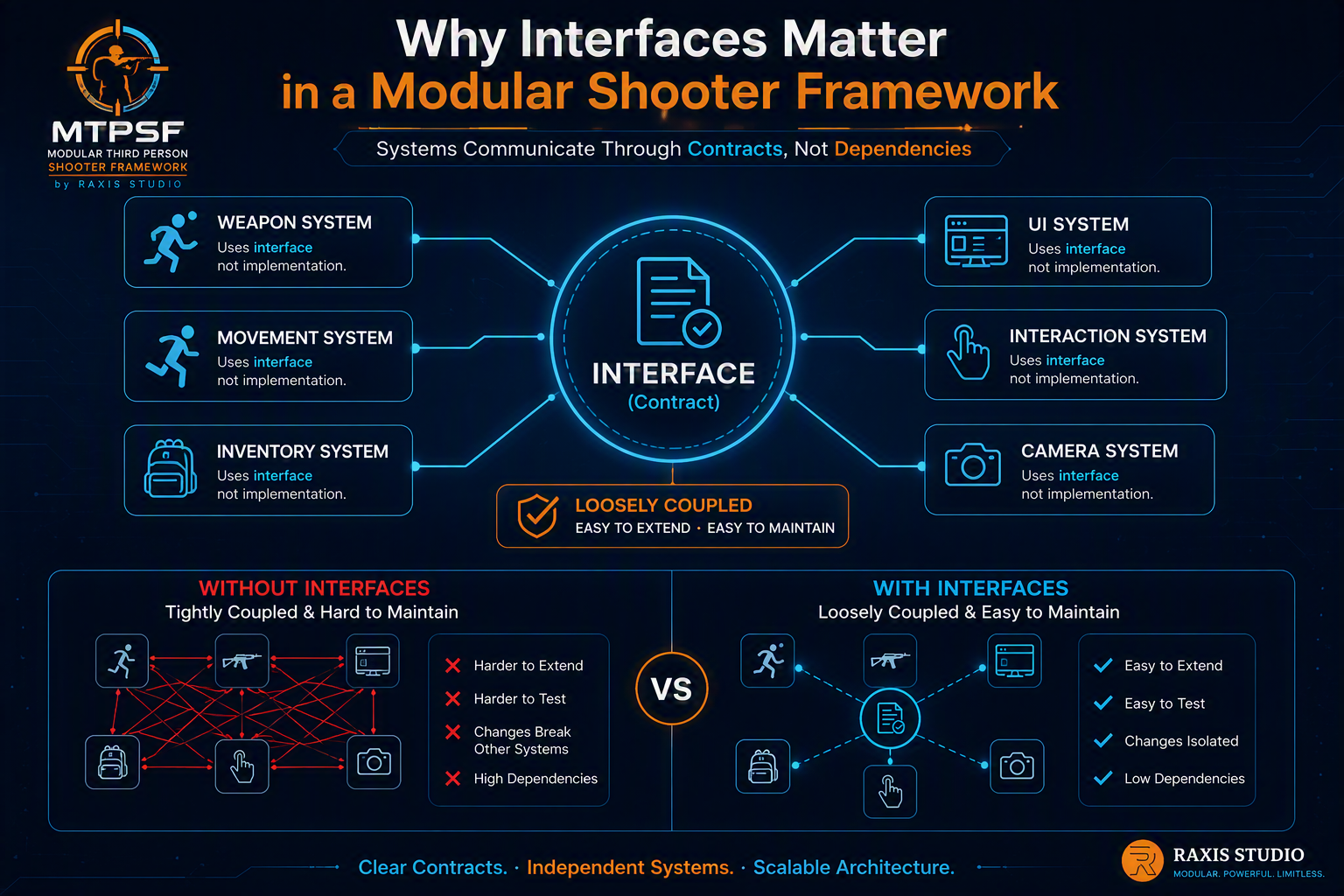
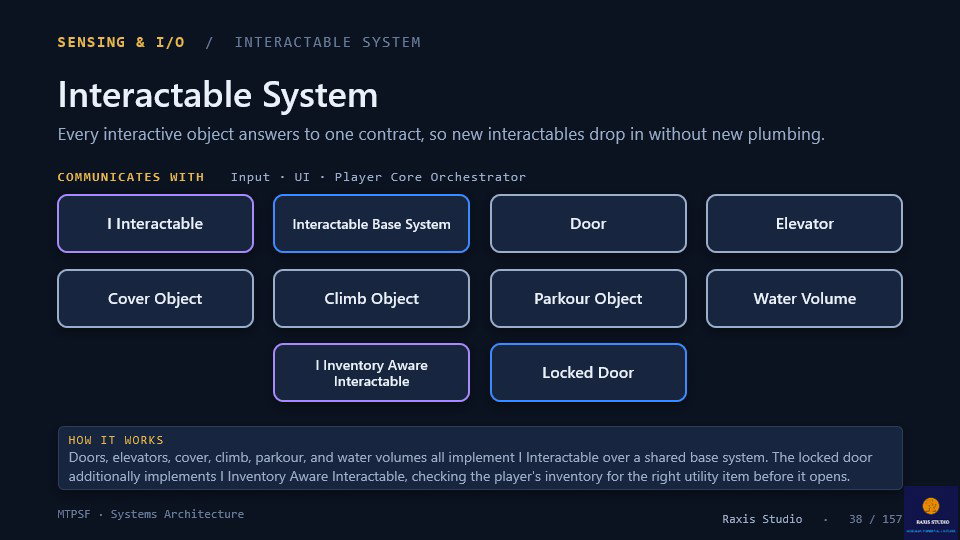
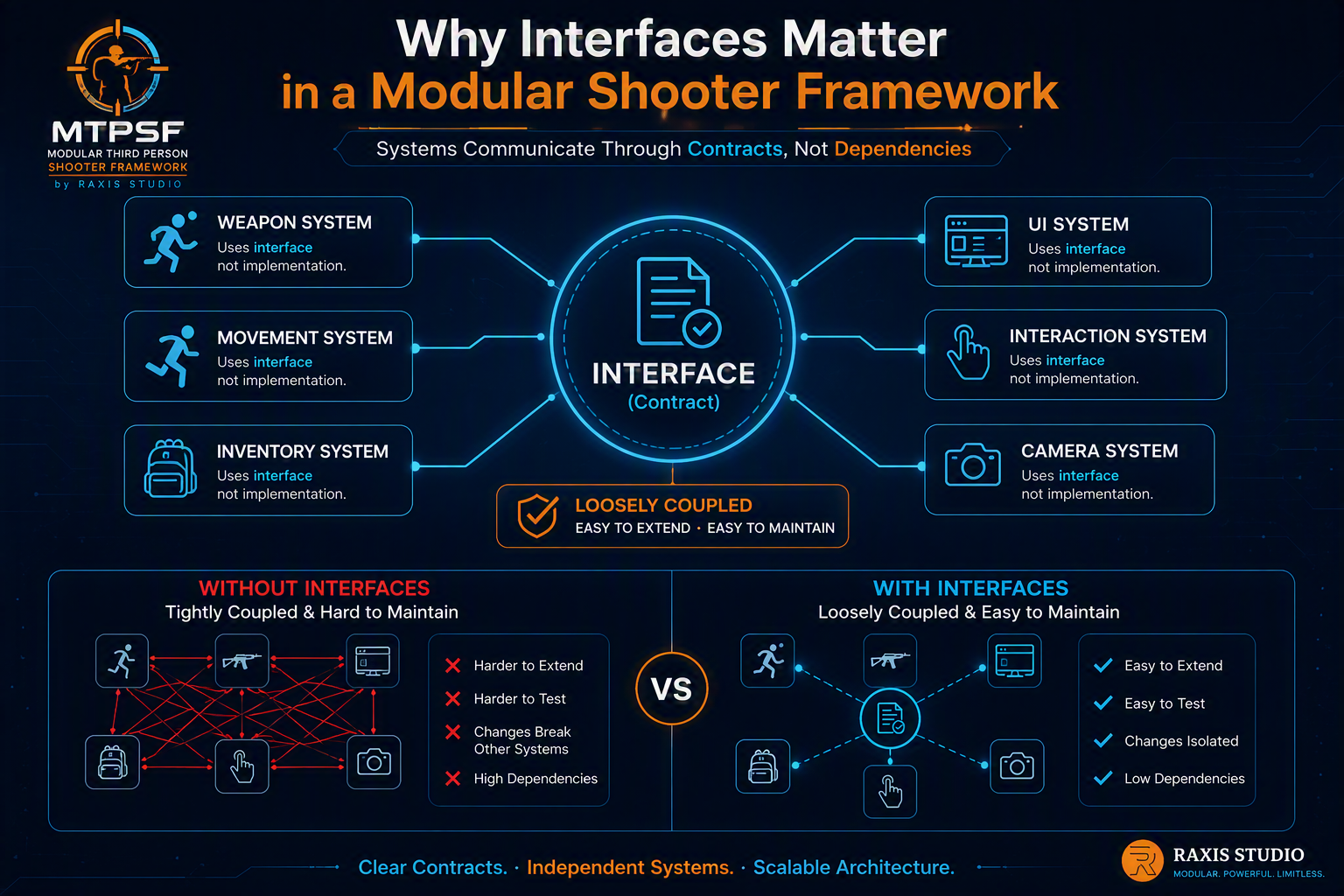
Interfaces matter in a modular shooter framework because they help systems communicate through clear expectations instead of direct dependencies.
In a complex Unity project, many gameplay systems need to work together. Movement, weapons, camera behavior, interaction, inventory, health, and UI feedback may all respond to the same player actions, but they should not all need to know the full internal details of each other. Without clear communication boundaries, systems can become tightly connected very quickly. A weapon system may directly depend on a specific player controller. A UI element may directly read data from several gameplay scripts. A camera system may need to check exact weapon or movement classes before deciding how to respond. These connections may work at first, but they make the framework harder to modify when the project grows.
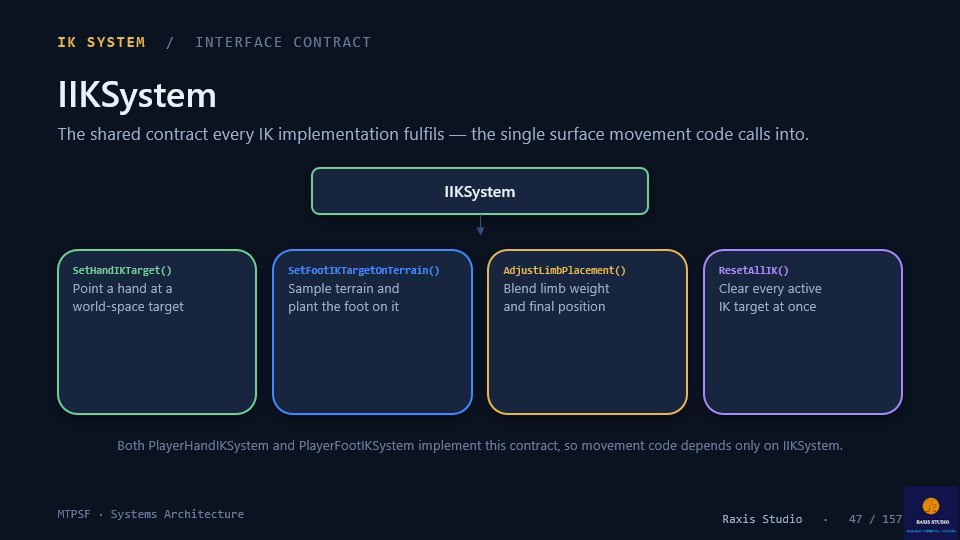
An interface helps solve this problem by defining what a system can do without forcing other systems to depend on how that behavior is implemented. Instead of asking for a specific concrete class, a system can depend on a contract. This contract describes the behavior that is available, while the implementation can remain flexible behind it. For example, a system may need to know whether an object can receive damage, whether an item can be picked up, whether a weapon can be equipped, or whether an interaction can be triggered.
The system does not always need to know the exact class name or the full implementation behind that behavior. It only needs to know that the target supports the expected action. Interfaces make this kind of communication cleaner. This is especially useful in shooter frameworks because the same type of behavior can appear in different forms. Different weapons may share equip, fire, reload, or configuration behavior while still having their own internal logic. Different interactable objects may respond to player input in different ways while still following a common interaction contract. Different damageable objects may react differently to hits while still supporting a shared damage behavior. By using interfaces, a modular framework can avoid forcing every system to depend on one specific implementation.
This makes the architecture more flexible. If a new weapon type, interaction type, or gameplay object is added later, it can follow the expected contract without requiring unrelated systems to be rewritten.
The framework becomes easier to extend because systems communicate through roles instead of fixed class relationships. Interfaces also support cleaner testing and debugging. When a system has a clear contract, it becomes easier to understand what it expects from other systems. If behavior is not working as intended, the developer can inspect whether the expected interface is implemented correctly, whether the system is receiving the correct object, or whether the communication flow is being triggered at the right time. This can be easier than tracing many direct dependencies across unrelated scripts. Another benefit is readability.
A well-named interface can describe intent clearly. It can show that an object is damageable, interactable, equippable, reloadable, configurable, or able to provide a certain type of data.
This helps developers understand the role of an object faster, especially when working with a framework they did not build from the beginning. In MTPSF, interfaces are part of the broader architecture direction. They help support modularity, separation of responsibilities, and cleaner communication between systems.
They are not used to make the framework look more complex. They are used because a shooter framework needs many systems to cooperate while still remaining understandable and maintainable. This distinction matters for reusable Unity assets.
Developers may want to adapt the framework to different project needs, different gameplay styles, or different object types. Interfaces help make that adaptation safer because they reduce the number of places where concrete assumptions are hardcoded.
A system can remain stable while the implementation behind an interface changes. A modular shooter framework benefits from interfaces because they create a healthier relationship between systems.
Each system can ask for the behavior it needs without owning every detail of how that behavior is produced. This keeps the framework more flexible, more readable, and more practical for long-term development.