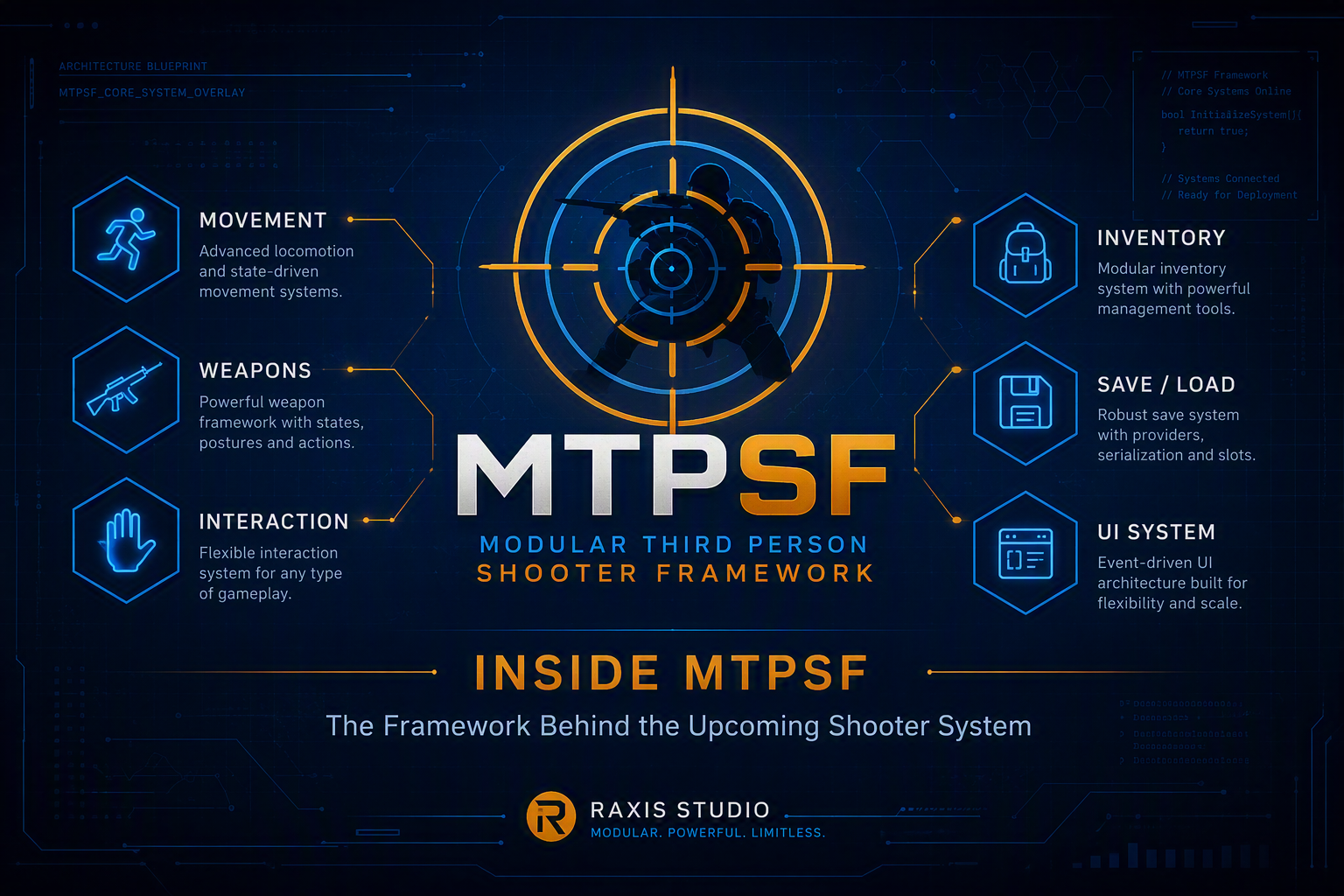
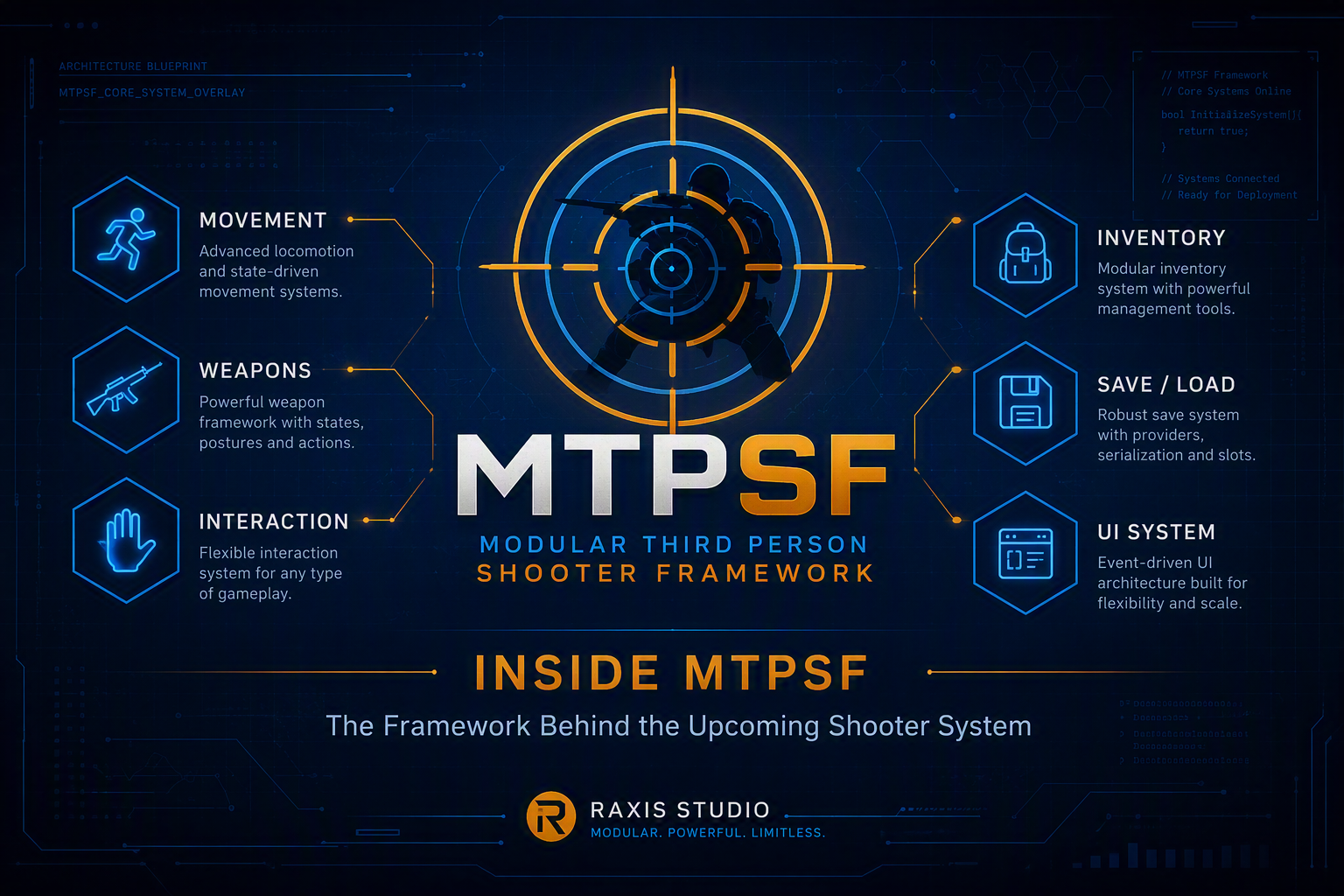
Inside MTPSF: The Framework Behind the Upcoming Shooter System
MTPSF is being developed as an upcoming modular third person shooter framework for Unity, with a focus on structure, clarity, and long-term usability.
Shooter systems often involve many connected parts, and the way those parts are organized can affect how easy the project is to maintain, extend, and understand over time.
A third person shooter framework is not only about aiming and shooting. It usually needs to connect movement, camera behavior, weapon handling, input, interaction, inventory, health, user interface feedback, and many other gameplay systems.
When these systems are built without a clear structure, the project can become difficult to change as soon as new requirements appear.
For example, a weapon system may need to communicate with camera logic when aiming. Movement may need to react differently during combat, cover, or interaction states. UI elements may need to reflect ammunition, health, stamina, item pickups, or interaction prompts.
Each of these systems may appear separate at first, but in a shooter framework they often influence each other in many small ways. This is where the foundation of the framework becomes important.
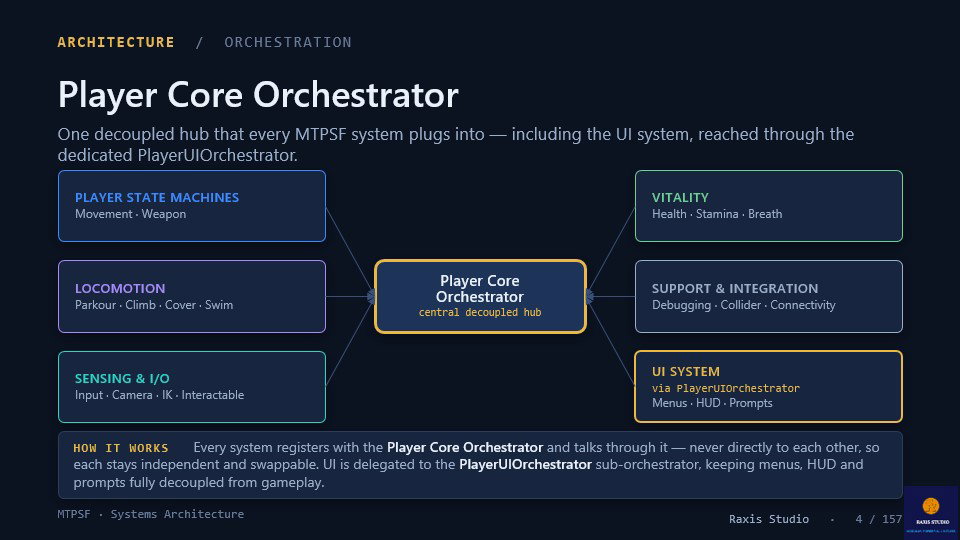
MTPSF is being shaped with a modular approach so that connected systems can remain organized instead of becoming tightly tangled together. The goal is to support shooter gameplay through a structure that is easier to read, easier to configure, and easier to reason about when a developer needs to understand how the project works.
Architecture plays an important role in this direction. Concepts such as interfaces, events, state machines, Scriptable-Objects, modular systems, and separation of responsibilities help reduce unnecessary dependencies between parts of the framework.
These concepts are not used only as technical patterns; they support a practical goal: making the framework more manageable as its systems grow.
In a modular shooter framework, clarity matters because every system has a role. Weapon behavior should not become a place where unrelated logic is hidden.
Camera behavior should not be forced to know every detail about inventory or interaction.
Movement should not become overloaded with combat decisions that belong somewhere else.
When responsibilities are separated, each system becomes easier to inspect, test, and adjust.
MTPSF is also being prepared with developer experience in mind. A framework can include powerful gameplay behavior, but it still needs to be understandable after it is imported into another project.
Clear naming, organized configuration, consistent structure, and documentation all contribute to whether another developer can trust the framework and work with it confidently. This is especially important for reusable Unity assets.
Developers are not only looking for systems that work during a demonstration. They also need systems that can be studied, adapted, extended, and maintained inside their own projects.
The internal structure of a framework can become just as important as the visible gameplay features it provides.
For Raxis Studio, MTPSF represents a continuation of modular development thinking applied to a third person shooter framework. The focus is not only on creating shooter mechanics, but on building those mechanics inside a foundation that supports clarity, organization, and long-term use.
This direction helps keep the framework practical for real development rather than limited to a one-time showcase.
MTPSF is still moving toward release, but its direction is already clear: a modular, developer-focused shooter framework designed around clean structure, connected systems, and a workflow that can support future extension.
The framework behind the upcoming shooter system is not only about what the player can do on screen; it is also about how the systems behind that gameplay are built, organized, and prepared for developers.