Designing MTPSF With the Developer Experience in Mind
Developer experience is an important part of any reusable Unity framework. A system may include strong features and solid internal logic, but if developers cannot understand how to configure it, where to look, or how its parts connect, the framework becomes harder to adopt. This is especially true for shooter systems, where many gameplay components need to work together at the same time.
MTPSF is being shaped with developer experience in mind because a framework should not only work internally. It should also be readable, configurable, and practical for developers who import it into their own projects. The value of a framework depends not only on what it can demonstrate, but also on how confidently another developer can study it, adjust it, and build on top of it.
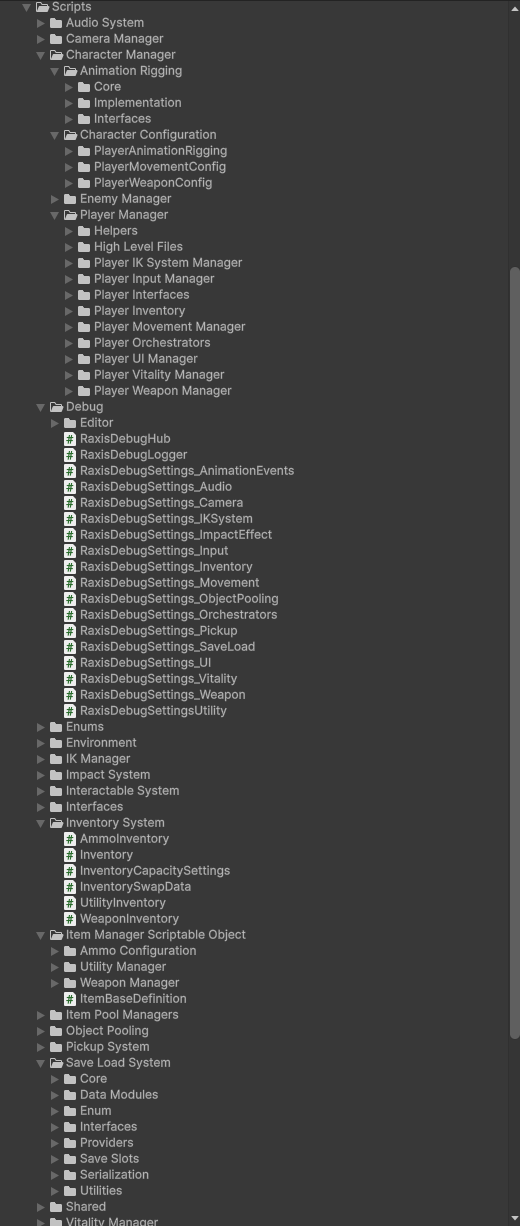
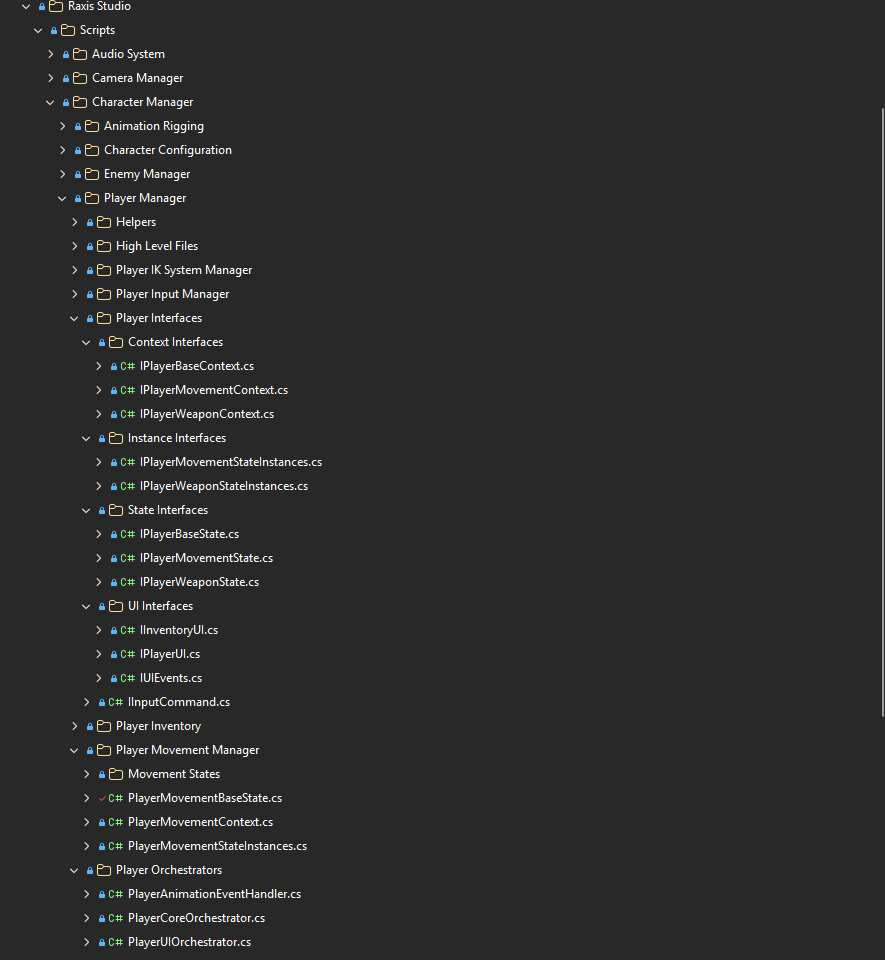
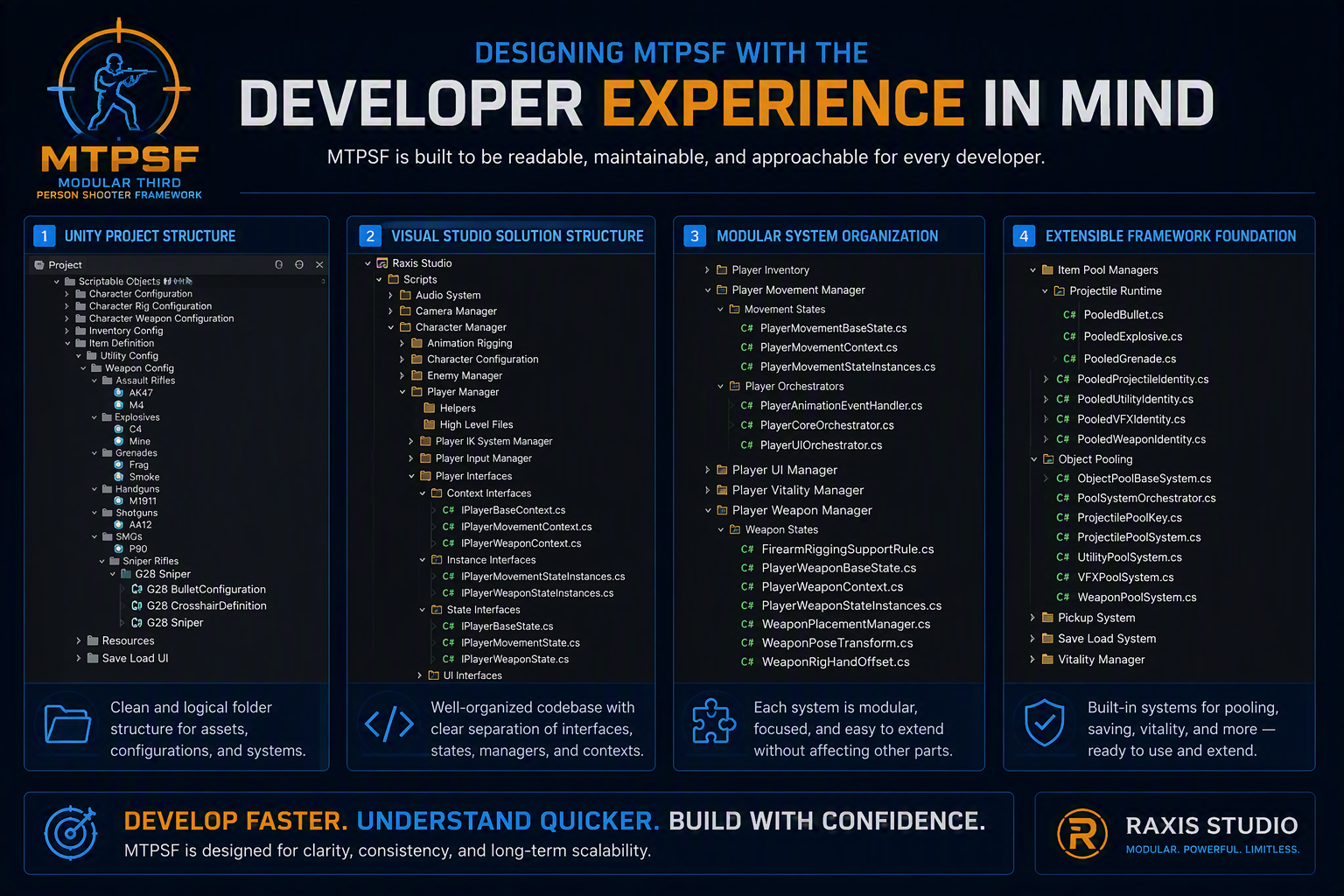
One part of developer experience is structure. When systems are organized around clear responsibilities, developers can understand the framework faster. Movement, weapons, camera behavior, interaction, inventory, health, and UI feedback should not feel like they are all hidden inside one large script.
Each system should have a recognizable role, so developers can identify where behavior belongs and where changes should be made. Configuration also affects the developer experience. A framework becomes easier to use when important values are not buried inside code. Weapon settings, movement values, camera response, interaction distances, and other tunable data should be organized in a way that supports iteration.
When configuration is easier to find and adjust, developers can test ideas without unnecessary friction. Clear naming is another important detail. Names help developers understand intent before they even open the code. A well-named class, method, ScriptableObject, event, or configuration asset can explain what a system is responsible for. Poor naming can make even a functional framework feel harder to trust because the developer must spend more time guessing what each part does. Documentation is also part of the experience.
Developers need to know not only that a system exists, but how it should be used. XML summaries, tooltips, user guides, setup notes, and clear explanations can reduce confusion and make the framework easier to evaluate. Documentation does not replace good architecture, but it helps reveal the architecture in a way that developers can follow. Developer experience also depends on predictability.
When a developer changes a value, connects a system, or enables a feature, the result should be understandable. If one small adjustment creates unexpected behavior across unrelated systems, confidence in the framework drops.
This is why modular design, clear communication, and separated responsibilities matter from a usability perspective, not only from an architecture perspective.
In a shooter framework, predictability is especially valuable because many systems react to the same gameplay context. Aiming may affect camera behavior. Weapon state may affect UI feedback. Movement may change during combat or interaction. If these relationships are structured clearly, developers can understand how the systems cooperate. If they are hidden or tangled, even simple changes can become stressful.
MTPSF approaches developer experience as part of the product itself. The framework is not only being prepared to show gameplay behavior, but also to make that behavior easier to inspect and work with. A reusable asset should help developers move forward, not force them to spend unnecessary time untangling systems before they can begin building. This does not mean every system must be simplified until it loses flexibility. A shooter framework naturally includes complexity.
The important goal is to make that complexity organized. Developers should be able to see the structure, understand the configuration, follow the communication flow, and identify where changes belong. Designing with developer experience in mind means thinking beyond the first demonstration. It means preparing the framework for the moment another developer opens the project, studies the systems, reads the documentation, changes values, and tries to adapt the framework to a real production need. That moment is where usability, structure, and clarity become part of the value of the asset.
For MTPSF, developer experience is connected to the same modular direction that shapes the rest of the framework. Clear responsibilities, organized configuration, meaningful naming, and documentation all help make the framework easier to understand and easier to build upon. A strong shooter framework should not only provide systems that work; it should provide systems that developers can confidently use, learn from, and extend.